
With over 20 years in the t-shirt printing game, we get asked the same question most weeks. Which is the best t-shirt for printing? There is no single answer that covers every job, but there is an easy way to work out which is the right one for what you need.
Picture it. You have got your artwork ready and now you need to choose the t-shirt to print it on. It sounds like the easy part. But in practice, picking the best t-shirt for printing has a lot of influence on your finished order, and getting this right is essential.
Ultimately, it comes down to three factors. The fabric, weight and fit. From here you can build a shortlist around different criteria depending on what the needs of your t-shirt will be. Let’s get into the details of this all.
Have a read of the lot if you have five minutes spare. If not, jump to what you need:
- What makes a good t-shirt for printing?
- Which fabric, weight and fit suit your needs?
- Best cotton t-shirts for printing
- Best premium t-shirts for printing
- What about the different printing methods?
- How to choose the right t-shirt for your project
What Makes A Good T-Shirt For Printing?
As we touched upon, three key factors decide how well a blank t-shirt prints and how long that print survives. Fabric, weight and fit.
Fabric
This is the first call, and it can trip people up. You have to get your t-shirt fabric right for the best print.
- Cotton is the best t-shirt material for the majority of print jobs because the fibres absorb ink properly, particularly with DTG
- Polyester holds colour brilliantly and dries fast, which is why it dominates sportswear, but it needs a transfer-based method rather than direct printing
- Blends sit in the middle and are a sensible compromise when you want a bit of both
There is one bit of insider knowledge that you will not find on most guides. Check whether the cotton is ringspun. Ringspun yarn is twisted during spinning, which produces a finer, smoother thread and a tighter knit. Why does that even matter? Well, it gives ink a flatter surface to sit on and noticeably better detail. Standard carded cotton is coarser and cheaper, and it prints perfectly well, but fine detail comes through crisper on a ringspun tee. Neither is wrong. But if you are printing a photograph or a design with small text, that difference is worth paying for.
Weight
T-shirt weight is measured in GSM (grams per square metre), and this tells you how light or heavy your t-shirt is. Now naturally, we aren’t all experts in knowing what a light or heavy t-shirt is when it comes to GSM. That’s fine. Here are the main GSM bands, so you can match a weight to the kind of job you are printing for.
- Lightweight sits at roughly 140-160gsm
- Standard mid-weight at 165-185gsm
- Heavyweight from around 190gsm up
Heavier fabric is more opaque, which means less of the shirt colour shows through your print. It also takes a bold design without distorting, and it survives a lot more washes. Lighter fabric typically costs less and is cooler in hot weather. Match the needs of your t-shirt to the weight. Want something for a more professional environment? A heavier option carries a more premium feel and is well suited for workwear. Need a printed t-shirt for active or sportswear purposes? Consider a lightweight option that will keep you cool.
Fit
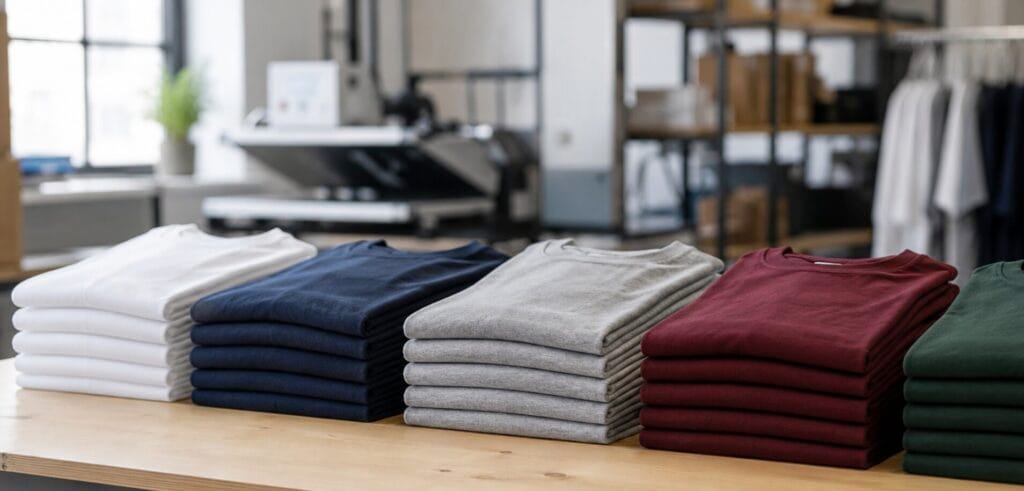
It goes without saying, but fit matters. And it doesn’t just matter in terms of style. It has a direct impact on the printing area of your t-shirt as well.
- A boxy, relaxed cut gives you a wider, flatter print area across the chest
- A slim fit curves more, so large designs can wrap and look stretched
If your logo is going front and centre at full width, a regular or relaxed fit is the safer choice. If your heart is set on a slimmer fit style, adapt your logo and design to accommodate this. Put simply, you have to match the fit to the size of your artwork. It’s a small thing at surface level, but one that can save you a lot of disappointment later down the line.
Which Fabric, Weight And Fit Suit Your Needs?
With the different choices between each of these three important factors, it can be tricky to pin down what the best option is for your use case. Not to worry. We have put together a simple comparison table, so you can work out what attributes to prioritise depending on what you need the tee for. This isn’t a hard and fast rule; these are just the trends we see most often at our printing facility:
| Use case | Fabric | Weight | Fit |
|---|---|---|---|
| Bulk event tees | Cotton | Lightweight | Regular |
| Retail or brand merchandise | Ringspun cotton | Mid to heavy | Relaxed or fitted |
| Branded workwear | Cotton or blend | Mid to heavy | Regular |
| Sportswear | Polyester | Lightweight | Athletic |
| Photographic prints | Ringspun cotton | Mid-weight | Any |
Best Cotton T-Shirts For Printing
Cotton accounts for the majority of what we print. It’s the most popular t-shirt material for a reason. Here are the three we recommend most.
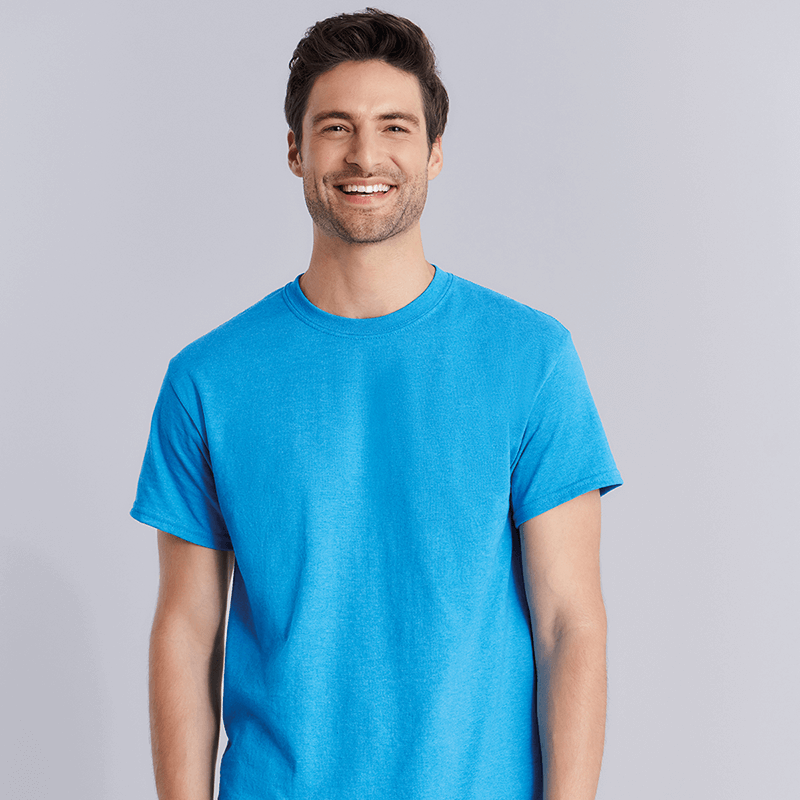
- Best all-rounder: Gildan Heavy Cotton Adult T-Shirt, from £4.59
- A mid-weight cotton tee at 175-185gsm that handles screen printing, DTG and DTF equally well. The colour range is one of the widest we stock. If you want one garment that covers most jobs, this is it.
- A mid-weight cotton tee at 175-185gsm that handles screen printing, DTG and DTF equally well. The colour range is one of the widest we stock. If you want one garment that covers most jobs, this is it.
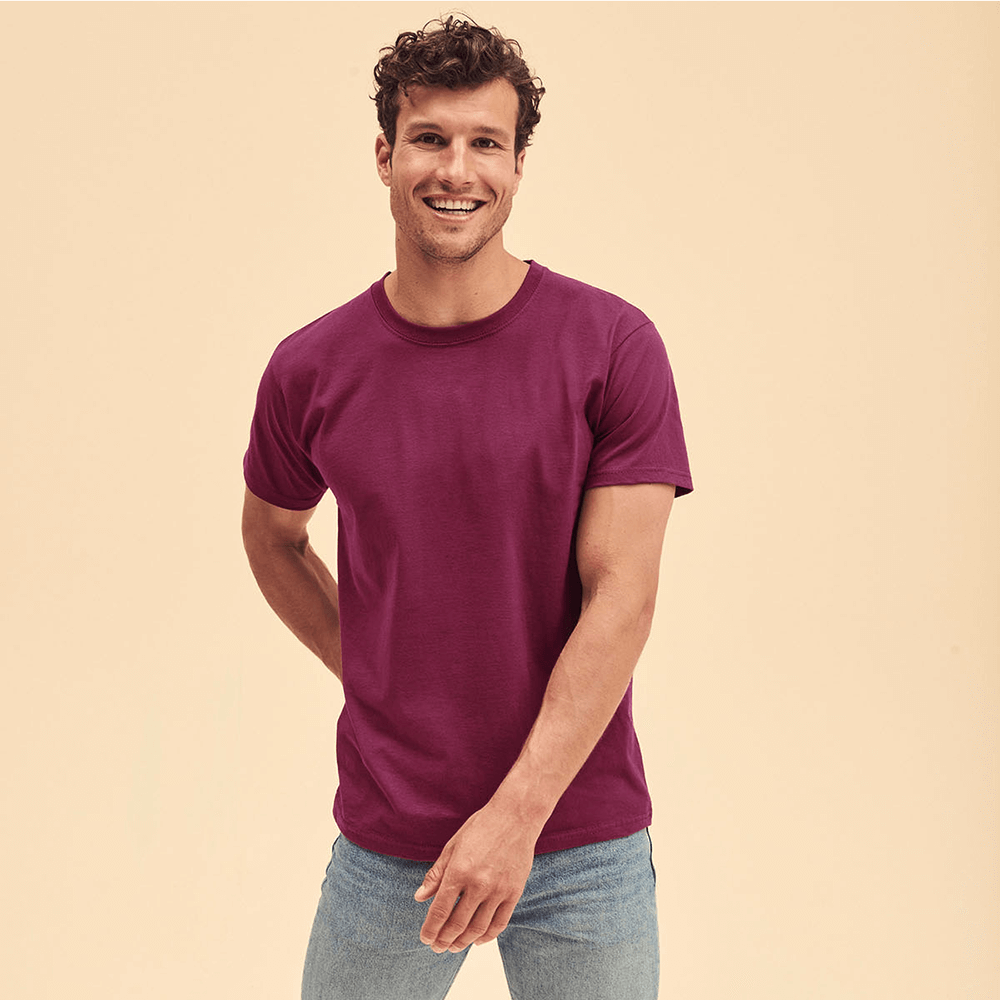
- Best on a budget: Fruit of The Loom Valueweight T, from £4.29
- The go-to option for budget bulk orders. Lighter fabric and a lower unit cost, it is the obvious pick for events, charity runs and anywhere you need a lot of shirts without a lot of spend.
- The go-to option for budget bulk orders. Lighter fabric and a lower unit cost, it is the obvious pick for events, charity runs and anywhere you need a lot of shirts without a lot of spend.
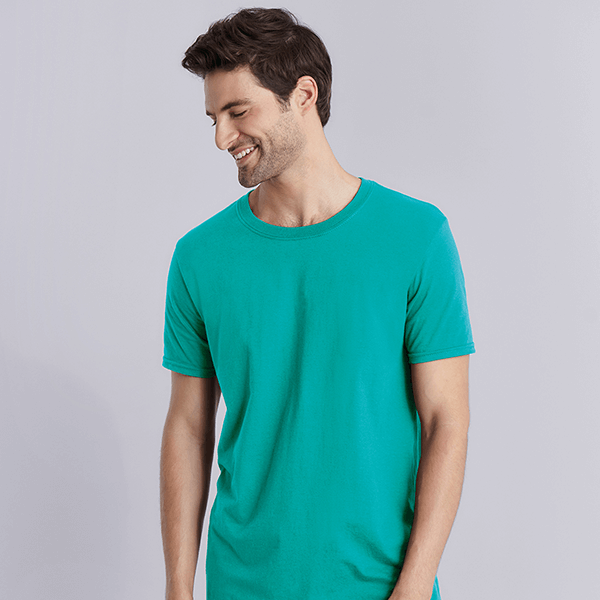
- Best for a retail feel: Gildan Softstyle T-Shirt, from £4.79
- Ringspun cotton with a softer handle and a lighter feel than its Heavy Cotton counterpart. Rated 4.9 out of 5, it’s one of our most popular tees. Pick this one when quality matters as much as the print.
Best Premium T-Shirts For Printing
There is a gap between a good bulk tee and a premium one. You’ll notice it the moment you have it in your hands. The yarn and knit are better quality, which gives you a stronger print surface. The garment also holds its shape and colour through far more washes. If the t-shirt is being sold, representing your brand or handed to someone whose opinion matters to you, the extra few quid is money well spent. Here are some of the best options:
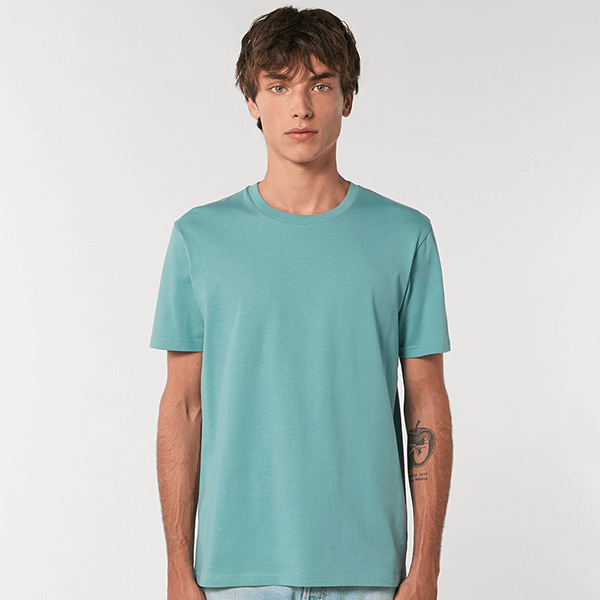
- Best for clothing brands: Stanley/Stella Unisex Creator Iconic T-Shirt, from £9.29
- Organic ringspun combed cotton at 180gsm, so you get a smooth, tight surface that handles detail beautifully. No branding on the neck label, making it simple to rebrand as your own. PETA-approved vegan too.
- Organic ringspun combed cotton at 180gsm, so you get a smooth, tight surface that handles detail beautifully. No branding on the neck label, making it simple to rebrand as your own. PETA-approved vegan too.
- Best heavyweight: Stanley/Stella Freestyler Relaxed Heavy T-Shirt, from £14.29
- At 240gsm this is one of the heaviest tees we stock, cut to a relaxed fit for that oversized streetwear look. The weight gives you a properly opaque canvas for big, bold graphics. Organic cotton with a brand-less neck label.
- At 240gsm this is one of the heaviest tees we stock, cut to a relaxed fit for that oversized streetwear look. The weight gives you a properly opaque canvas for big, bold graphics. Organic cotton with a brand-less neck label.
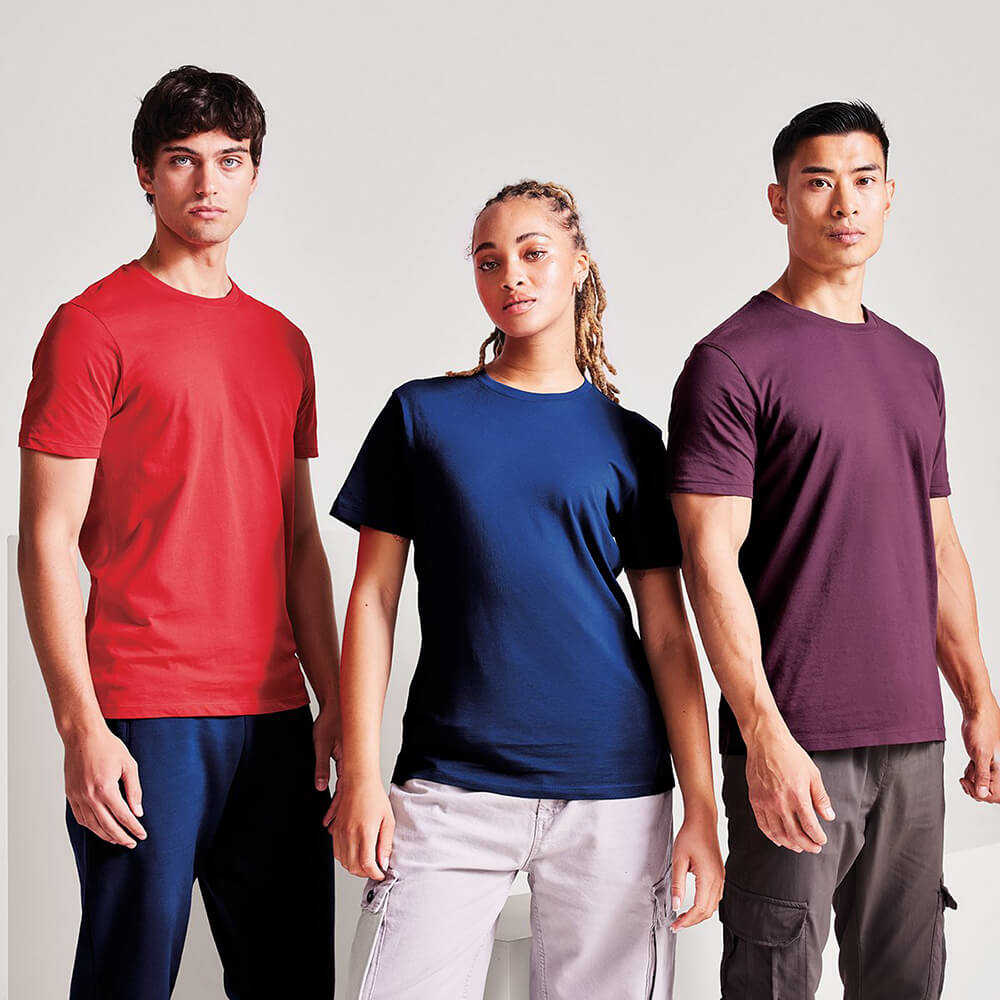
- Best value premium: Anthem Organic Unisex T-Shirt, from £7.59
- Organic cotton with a retail fashion fit and a soft-feel finish. Chain stitch detailing at the shoulders and neck, and no brand label, so it is easy to make it your own. Premium touches without the premium spend. Lovely.

What About The Different Printing Methods?
Confused about which t-shirt suits which printing method? Well, we have good news for you. It isn’t your problem. At least when you order with My Personalised Clothing. We select the right printing method for you, based on your chosen garment and your design. You can note a preference on our quote form and we’ll take it into account, though our experts will always steer you towards the best option.
That said, it’s worth knowing the basics. The method does influence which t-shirt is the better buy in some situations.
- DTG works best on cotton. The fibres absorb the ink, which is why 100% cotton gives the sharpest result and why the print ends up feeling part of the fabric rather than sitting on it. There are no set-up costs, so it suits smaller orders and detailed, colour-rich designs.
- DTF is the versatile one. The design is printed onto film first and then transferred, so it works on cotton, polyester, nylon and organic blends alike. If you’ve chosen a sports or performance tee, this could be the method we go for.
- Screen printing is where the value is on bigger orders. It’s the method we’ve relied on for over 20 years, and the more you order, the better the price per shirt gets.
We’ve put together a full guide on t-shirt printing methods, so check it out. It covers everything from DTG, DTF, screen printing and embroidery to digital transfer and heat transfer vinyl printing.
How To Choose The Right T-Shirt For Your Project
You are now armed with all the knowledge, but how do you actually choose the right t-shirt for your printing needs? Fans of the MPC blog might be familiar with this already, but you have to match the garment to your needs, not vice versa. Start with what the order is actually for. That answers the question faster than any spec sheet or guide can.
Match the garment to the job
Find the closest match to your project below and you have got yourself a tidy shortlist.
- Bulk order on a budget – Fruit of The Loom Valueweight T. Usually screen printed if the design is simple, which keeps the price per unit down on bigger runs.
- Brand or clothing line – Stanley/Stella Creator Iconic or Anthem Organic Unisex T-Shirt. The garment is part of the product, so quality is worth paying for.
- Event, stag, hen or charity merchandise – Gildan Heavy Cotton. Good balance of quality and price, and the colour range covers most themes. We even have a dedicated Stag Do T-Shirt.
- Photographic or highly detailed design – Gildan Softstyle or Bella + Canvas Unisex Jersey Crew Neck. Both are ringspun cotton, which gives ink a smoother surface and brings out fine detail.
- Sports or activewear – AWDis Cool T, or the AWDis Recycled Cool T. Both are lightweight polyester with sweat-wicking properties. Both suit club kit or a charity run.
Still weighing up a couple of options? Order one of each. We have no minimum order across our entire range, so you can hold both garments, compare the print quality in person, and place the full order knowing exactly what you are getting. If it’s a single unit, drop us a message on live chat or fill out our contact form and we will help you find the best tee for your needs. No matter what you are buying for, every single order gets free UK delivery.
So, which is the best t-shirt for printing? The one that suits your job. Get that right and everything else follows.
Browse our full range of custom t-shirts, or have a look at everything else we print. We stock hoodies, jumpers, polo shirts and plenty more to kit you out for any occasion.