

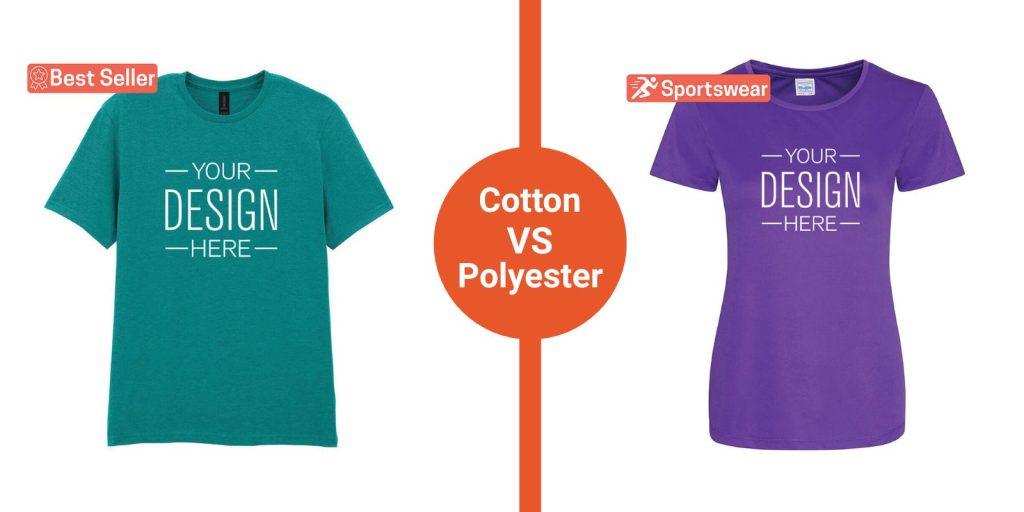
Cotton and polyester are the two fabrics behind most of the clothing you own, and the cotton vs polyester question is one we get asked all the time. They can look near enough identical on a rail and often feel quite similar in the hand, but the way each one performs – how it breathes, how it wears, and how it takes a print – couldn’t be more different. When you are ordering custom clothing, that difference matters more than you might think. Get it right, and you end up with clothing that does exactly what you need. Get it wrong, and you can be left with something that shrinks, fades, or just never quite feels right.
Being a leading in-house UK printer for over two decades, we work with both fabrics every single day across DTF, DTG, screen printing and other popular decoration methods. That means we can talk about cotton vs polyester from a slightly different angle to most guides. We actually have the experience and practical knowledge to back it up.
We recommend reading the full guide, but if you are pushed for time, you can jump straight to the section you need:
- Cotton vs polyester explained in 50 words
- What is cotton?
- What is polyester?
- What’s the difference between cotton and polyester?
- Which is more breathable?
- Which is more durable?
- Which is better for printing?
- What about polycotton blends?
- Which is better for the environment?
- Cotton vs polyester: which should you choose?
Cotton vs polyester explained in 50 words
Cotton is a natural fibre, so it is softer, more breathable and better for everyday wear.
Polyester is synthetic, so it is tougher, quicker drying and better at handling sweat, which makes it the king of sportswear and workwear.
Many garments blend the two to get the best of both.
That is the short answer, and for plenty of people, it is all they need. That’s fine, but now it is time to get stuck into a bit more detail.
Let’s start by fully understanding each fabric type.
What is cotton?
Cotton is a natural fibre that grows in soft, fluffy bolls around the seeds of the cotton plant. Those fibres are spun into yarn and woven or knitted into fabric, which is why cotton is described as a natural rather than a synthetic material. It has been used to make clothing for thousands of years, and it is still the fabric most people reach for when they want something soft and comfortable against the skin.
What people love about cotton is the feel. It is soft against the skin, it lets air move through it freely, and it absorbs moisture rather than trapping it on the surface. That combination makes it ideal for everyday clothing you wear all of the time. We’d bet that most of your wardrobe is made up of cotton garments because it just feels great day in, day out. Ever felt that your older t-shirts are a bit more comfortable and soft compared to your newer ones? You aren’t imagining things. One of cotton’s lesser-known qualities is that it improves with age, softening a little more with every wash. Your favourite cotton garment only gets cosier over time.
Plenty of the brands we stock are built around cotton for these exact reasons. Gildan and Fruit of the Loom are two of the best-known, and both have made their name on reliable, cotton printed t-shirts and sweatshirts. When a customer tells us they want something soft, classic and easy to live in, cotton options like these are usually the first place we look.
What is polyester?
Right, we know everything we need to about cotton, but what about polyester? Polyester is the synthetic counterpart to cotton. Rather than being grown, it is manufactured from petroleum-based plastics that are spun into fine threads and then made into fabric. That engineered origin is exactly why it behaves so differently. It was designed from the start to be tough, hard-wearing and resistant to stretching, shrinking and creasing. And boy, does it live up to that reputation.
Where cotton is all about comfort, polyester is all about performance. It keeps its shape no matter how many times you wash it, it dries in a fraction of the time, and instead of soaking up sweat, it wicks moisture away from the body so it can evaporate. That is why polyester has become the number one fabric for anything active, including sportswear, gym kit, performance base layers and high-visibility workwear.
This is polyester’s domain. If a garment needs to survive heavy daily use, repeated washing, or a sweaty five-a-side session without sagging out of shape, polyester is built for the job. It trades a little of cotton’s natural softness for resilience and function. For day-to-day wear, cotton still reigns supreme, but polyester is the obvious pick for sportswear and tough workwear environments.

What’s the difference between cotton and polyester?
Now that we have covered each fabric in more detail, you are probably starting to get a good idea of the differences between them. We have touched on some of the key points already, but it is good to summarise this in one place. The easiest way to think about it is:
- Cotton is the comfort fabric
- Polyester is the performance fabric
Cotton wins on softness and breathability, polyester wins on durability and moisture management. Almost every practical difference between them is backed by that single idea. We have pulled the key differences together in the table below so you can see them at a glance. We will then dig into the points that deserve a closer look later in the guide:
| Feature | Cotton | Polyester |
|---|---|---|
| Breathability | High – natural airflow | Lower – synthetic weave |
| Durability | Good, softens with age | Excellent, very hard-wearing |
| Comfort | Soft, natural feel | Smooth and lightweight |
| Moisture management | Absorbs, slow to dry | Wicks, dries fast |
| Shrink resistant | ✕ No | ✓ Yes |
| Wrinkle resistant | ✕ No | ✓ Yes |
| Quick drying | ✕ No | ✓ Yes |
| Biodegradable | ✓ Yes | ✕ No |
As the table shows, neither fabric is outright better than the other. That’s the wrong way to think about it. They are fundamentally built for different jobs. Cotton gives you comfort and breathability, polyester gives you durability and easy care. The right choice always comes back to how the garment will be used. Let’s look at the questions that come up most often, starting with the two we are asked about more than any others.
Which is more breathable?
Cotton is the more breathable fabric. It’s not really close either, but there is a caveat. Because it is a natural fibre with a looser, more open structure, air moves through cotton easily and heat escapes rather than building up. That is exactly why a cotton t-shirt feels so cool and comfortable on a warm day, and why cotton is still the first choice for summer clothing and anything worn in relaxed, everyday settings.
Now for that caveat. Cotton breathes well, but it also soaks up moisture and hangs onto it. Once a cotton garment gets sweaty, it stays damp, which can leave it feeling heavy and clammy. Polyester handles this differently. It is less breathable in the conventional sense, yet it pulls moisture away from your skin and dries quickly, so it can actually feel fresher when you are working up a sweat.
We find this really comes down to personal preference. Even with the cold and clammy feel, some will still prioritise the soft feeling of cotton, versus the harsher feeling of polyester. Generally speaking, for day-to-day wear and anything where staying cool and comfortable is the goal, cotton’s natural breathability is hard to beat. For sport, training or physical work where sweat is guaranteed, polyester’s moisture-wicking keeps you drier even though it breathes less. Like we say, this does come down to personal preference and some will still prefer cotton despite the fact it holds onto moisture. If you are going to be out doing physical activity all day with no opportunity to change, polyester is your winner. But that said, it is less about there being an outright winner and more about matching the fabric to the situation.
Which is more durable?
A point back to polyester here, as it is the more durable of the two. It is literally engineered for durability, and cotton just can’t compete with that – polyester is built to resist the things that break fabrics down. It holds its shape, resists shrinking and stretching, and copes with frequent washing far better than cotton. For garments that take a beating, like workwear, sportswear, or anything washed frequently, polyester will usually outlast a cotton equivalent.
That said, cotton has a trick of its own. While cotton is technically less hard-wearing, it ages beautifully. As we touched on earlier, a good cotton t-shirt or hoodie softens with every wash and moulds to the wearer over time, becoming more comfortable the longer you own it. Polyester stays much the same from day one to year three, which is exactly what you want from performance kit. Consistency. But it never develops that broken-in feel, and the gap in the comfort of the garment will only widen over time.
In the real world, the choice once again comes down to context. For demanding workwear and uniforms that need to survive heavy daily use and industrial washing, polyester’s resilience is the sensible pick. Your cotton garments just won’t take the same level of punishment. For everyday clothing where comfort counts for as much as longevity, cotton’s habit of softening and improving with age often makes it the more satisfying choice in the long run. Context is king, and pick your fabric around this.
Which is better for printing?
By now, you should have a pretty good idea of the differences between polyester vs cotton. But if you are still deciding which to choose for a printing project, we can offer our insight that nobody else can match. As is a common theme with this article, there is no outright winner on which fabric prints best. But there are nuances that make certain fabrics better suited to particular print methods, and knowing those pairings is exactly where we can help. Here is how cotton and polyester perform:
Printing on cotton
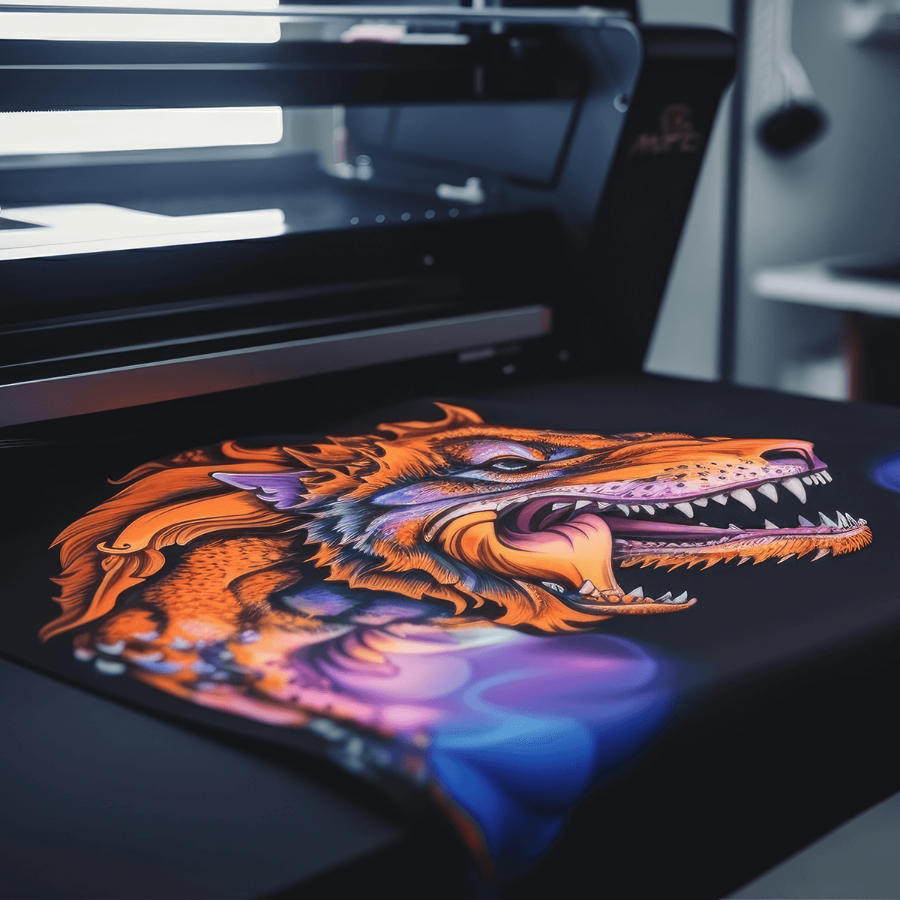
Cotton is the perfect fabric for ink that needs to soak in. With DTG printing, which works like an inkjet printer laying water-based ink directly into the fibres, cotton absorbs the ink beautifully to give bright, detailed, full-colour prints with a soft finish.
It also takes screen printing superbly, producing the classic, hard-wearing finish that makes it the go-to for larger bulk runs. If you have a design with lots of colour or fine detail, a cotton or cotton-rich garment is usually the strongest canvas.

Printing on polyester
Polyester needs a method that sits on the surface rather than soaking in, and that is exactly what DTF printing does. The design is printed onto a film and heat-pressed onto the garment, so it bonds to synthetic fabrics where DTG would struggle.
That makes DTF the standout choice for polyester, blends and mixed-fabric orders when you want a vivid, durable result. One thing to watch with polyester is dye migration, where the fabric’s own dye can bleed into lighter inks over time.
Embroidery on either fabric
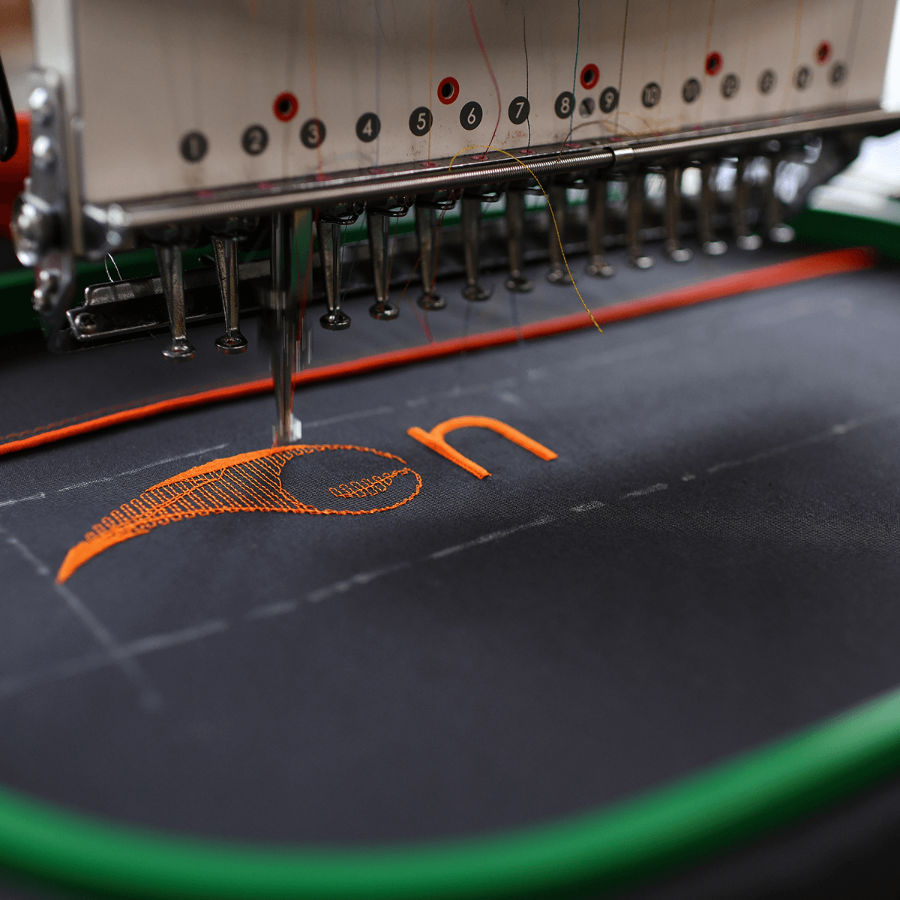
Embroidery is the great all-rounder, because it stitches the design in with thread rather than relying on ink soaking into the fabric. It works brilliantly on both cotton and polyester, as long as the garment is stable enough to hold the stitches cleanly. Heavier cotton items, polo shirts and structured polyester workwear all take embroidery really well, which is why it is such a popular pick for logos, branded uniforms and a smart, premium finish.
If you are not sure which combination is right for your order, this is the sort of thing we advise on all the time, so feel free to ask and we will steer you the right way. Whenever you order through My Personalised Clothing, we will always choose the best possible decoration method for your garment. So you don’t have to worry about becoming an expert on the different printing types that are best for polyester or cotton. We take care of that for you.
What about polycotton blends?
You don’t always have to pick a side. It’s quite clear that both fabrics have different properties which make them great, so why not get the best of both worlds? A huge amount of clothing is made from a blend of both. A polycotton blend mixes cotton and polyester fibres in a single fabric, aiming to capture the best of each. A typical split might be around 65% polyester to 35% cotton, although the exact ratio changes depending on what the garment is meant to do.
The appeal of a blend is that it balances the strengths and softens the weaknesses. You get a good helping of cotton’s softness and breathability together with polyester’s durability, shape retention and resistance to shrinking and creasing. Blends also tend to be more affordable and easier to care for than pure cotton, which is why they are so widely used across the clothing industry.
That balance makes blends an ideal choice for garments that need to look good and last, particularly workwear and uniforms. A blended polo shirt or sweatshirt will hold its shape through constant washing while staying comfortable enough to wear all day, which is exactly what a staff uniform needs to do. A great deal of our workwear and uniform range uses blended fabrics for precisely this reason. The balance of durability and comfort that a polycotton blend offers can often be the best approach if you still aren’t sure.
Which is better for the environment?
Neither fabric is the obvious eco-friendly choice, and it is only right to be upfront about that. Cotton and polyester both come with an environmental cost, just in different forms, so the greener option really depends on which trade-offs you care about most.
Cotton has the advantage of being natural and biodegradable, so it breaks down at the end of its life instead of sitting in landfill for decades. Its main weakness is water. Conventional cotton needs a huge amount of water to grow, and a single garment can swallow a surprising amount, often alongside the pesticides used in farming it. Organic cotton eases some of that, but water use remains cotton’s biggest environmental headache.
Polyester comes at it from the other direction. It is made from petroleum, a finite fossil fuel, and it does not biodegrade, which are real drawbacks. On the other hand, polyester can be recycled, and recycled polyester made from old plastic bottles and other waste is now common in clothing. It uses less water than cotton and gives discarded plastic a useful second life. If sustainability is high on your list, our recycled polyester guide explores the topic in much more detail, and our eco-friendly clothing range gathers our more sustainable garments together in one place.

Cotton vs polyester: which should you choose?
The question we have been building to this entire article. The finale. What should you choose between cotton vs polyester? We know this sounds like a bit of a cop out, but the honest answer is, it depends. It is the same with most things in clothing, but you want to match the fabric to your particular needs, not the other way around. To make the decision simple, here is how we would steer it.
Choose cotton if comfort and breathability are your priorities. It is the natural pick for everyday custom t-shirts, personalised hoodies and anything worn for long stretches, especially if you want a soft, full-colour DTG print. Choose polyester if durability and performance matter most. It is the fabric for sportswear, activewear and hard-working teamwear that needs to keep its shape through heavy use. And if you want a bit of both, a polycotton blend is a genuinely smart middle ground, particularly for workwear and uniforms.
Whichever direction you take, you can design and order it with My Personalised Clothing. For over 20 years, we have been a leading UK print specialist. We have no minimum order across our whole range, and there is free UK delivery on every single order. That means you can order a single sample to check both the fabric and the print before you commit to a bigger run. Still weighing up cotton vs polyester for your project? Get in touch and we will happily talk you through the best fabric and print method for what you are planning.