


So, you’ve been thinking about starting a t-shirt business from home, but aren’t quite sure where to begin? You’re in good company. The barriers to entry have never been lower, and with the rise of on-demand t-shirt printing services and user-friendly online design tools, launching your own t-shirt business has become incredibly accessible for aspiring UK entrepreneurs.
The custom t-shirt market continues to thrive, with the global custom t-shirt printing market projected to reach nearly $10 billion by 2030. Whether you’re looking to start a side hustle alongside your day job or build a full-time income, starting a t-shirt business from home offers flexibility, creative freedom, and genuine profit potential.
With over two decades of experience in the printing industry, we’ve helped countless entrepreneurs launch successful t-shirt businesses. We’ve also seen others struggle with avoidable mistakes. We know exactly what it takes to succeed, from choosing the right printing methods to pricing your products competitively. That’s why we’ve created this guide to share our industry knowledge and help you avoid the common pitfalls that trip up new t-shirt business owners.
Today, we’ll walk you through everything you need to know about how to start a t-shirt business from home in the UK. From finding your niche and creating designs to choosing the right business model and marketing your products, you’ll have all the information you need to get your t-shirt business off the ground.

Overview
To start a t-shirt business from home, you need to: identify a profitable niche, create sellable designs, choose between print-on-demand or bulk ordering, understand printing methods, register your business legally, price competitively, build an online presence, market effectively, and partner with a reliable supplier. This guide breaks down each step:
- Find Your Niche – Identify your target market and stand out from competitors
- Create Your T-Shirt Designs – Design options and key considerations for sellable designs
- Choose Your Business Model – Print-on-demand vs buying in bulk
- Understand Printing Methods – DTF, DTG, and screen printing explained
- Set Up Legally in the UK – Registration, tax, and compliance essentials
- Price Your T-Shirts for Profit – Calculate costs and set competitive prices
- Build Your Online Presence – Create a website and social media strategy
- Market Your T-Shirt Business – Organic and paid marketing tactics
- Choose the Right Printing Partner – What to look for in a supplier
Whether you’re just exploring the idea or ready to launch tomorrow, this guide gives you the roadmap to start your t-shirt business from home with confidence.
1. Find Your Niche
Before you start designing t-shirts, it’s crucial to identify your target market. The custom t-shirt industry is competitive, and trying to appeal to everyone rarely works. Instead, focus on a specific niche that you understand well or are passionate about. Consider the following when choosing your niche:
- Interest-based niches – Hobbies, sports, gaming communities, or specific fandoms that have dedicated followings
- Profession-based niches – Teachers, nurses, engineers, tradespeople, or other professional groups who value industry-specific humour and designs
- Lifestyle niches – Fitness enthusiasts, dog lovers, plant parents, or other lifestyle communities
- Occasion-based niches – Stag and hen parties, family reunions, sports team events, or corporate away days
- Demographic niches – Parents, students, retirees, or specific age groups with shared experiences
A well-defined niche helps you create targeted designs that resonate with your audience, makes your marketing efforts more effective, and allows you to build a recognisable brand identity. For example, if you focus on t-shirts for dog walkers, you can create designs that speak directly to their experiences and market through dog-walking forums, social media groups, and local pet shops. People love their pets, so looking at a pet-specific niche could be a great direction for your new t-shirt brand.
Even if you already have something in mind, try to really understand what niche you are targeting. The clearer your niche, the easier it becomes to make decisions about design styles, colour palettes, messaging, and marketing channels. Everything from your typography choices to your social media strategy should align with what appeals to your specific target audience.
2. Create Your T-Shirt Designs
Once you’ve identified your niche, it’s time to bring your ideas to life through design. Your designs are the foundation of your t-shirt business, so it’s worth investing time and effort into getting them right.
Design options include:
- DIY design tools – Free platforms like Canva or GIMP allow you to create simple text-based designs or combine elements to create unique graphics
- Hire a freelance designer – Platforms like Fiverr, Upwork, or PeoplePerHour connect you with professional designers who can bring your vision to life for a reasonable fee
- Purchase designs – Websites like Creative Market or Etsy sell pre-made designs that you can license for commercial use
- Use our online design tool – Our easy online design tool lets you upload your own artwork, add text, and position elements exactly where you want them. Just pick your favourite custom t-shirt from our range, choose your colour, and access our tool completely free of charge.
Key design considerations:
- Keep designs simple and bold – intricate details can get lost in printing
- Ensure your designs work well at the sizes you’ll be printing
- Consider how your design will look on different coloured t-shirts
- Check that any fonts or graphics you use are properly licensed for commercial use
- Test your designs on mockups before committing to production
Remember, your first designs don’t need to be perfect. Many successful t-shirt businesses start with a small collection and expand based on customer feedback and sales data.

3. Choose Your Business Model
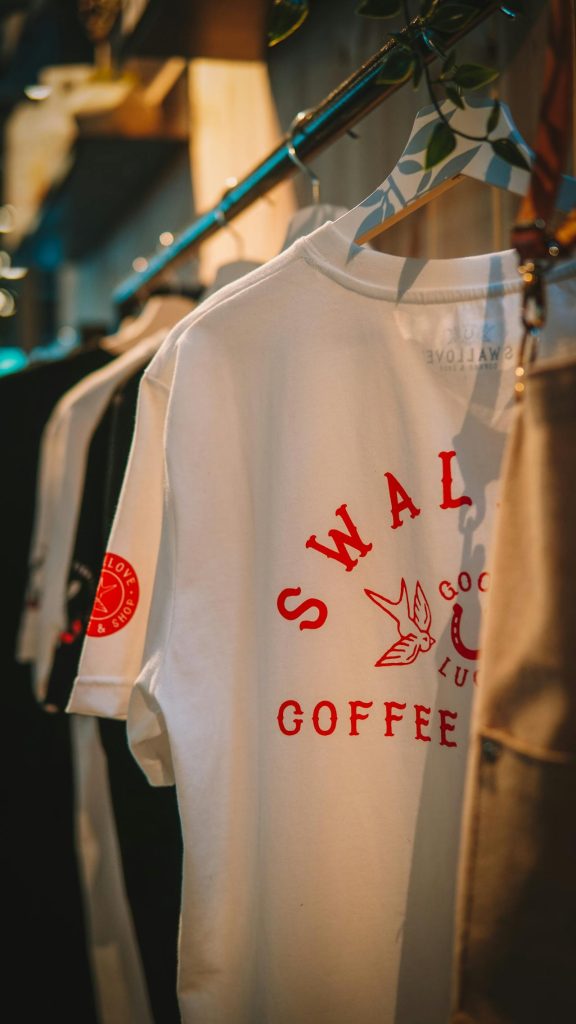
When starting a t-shirt business from home, you have two main business models to consider. Each has its own advantages and challenges, and the right choice depends on your budget, storage space, and risk tolerance.
Print-on-Demand (Recommended for Beginners)
With print-on-demand, t-shirts are only printed when a customer places an order. You upload your designs to a printing service, set your prices, and the supplier handles production, printing, and often shipping directly to your customer.
Advantages:
- No upfront inventory costs or storage requirements
- Zero risk of unsold stock
- Easy to test multiple designs without financial commitment
- Ideal for running a business from home with limited space
- Can start immediately without significant capital investment
Disadvantages:
- Higher per-unit costs compared to bulk ordering
- Less control over production timelines
- Smaller profit margins on individual sales
My Personalised Clothing offers the UK’s favourite t-shirt printing services, with no minimum order requirements and free standard UK delivery, making it perfect for entrepreneurs just starting out. Our UK-based facility in Southend-on-Sea ensures quick turnaround times and quality control. We may even offer discounted rates for some startup t-shirt brands – speak to our team to find out more.
Buying in Bulk (For Established Businesses)
This model involves ordering t-shirts in bulk, having them printed, and holding inventory that you ship to customers as orders come in.
Advantages:
- Lower per-unit costs, resulting in higher profit margins
- Full control over inventory and shipping
- Ability to attend markets, pop-ups, or retail opportunities
- Faster shipping times once stock is held
Disadvantages:
- Requires significant upfront investment
- Risk of unsold inventory if designs don’t sell
- Needs storage space for stock
- More complex to manage from home
Many successful t-shirt businesses start with print-on-demand and transition to bulk ordering once they’ve identified their best-selling designs and built a steady customer base.
4. Understand Printing Methods
Choosing the right printing method impacts both the quality of your t-shirts and your production costs. Different techniques suit different design types, so understanding your options helps you make informed decisions.
Direct-to-Film (DTF) Printing
DTF printing involves printing your design onto a special heat-resistant film, which is then heat-pressed onto the t-shirt. This method has become increasingly popular due to its versatility and ability to work across different fabric types.
Best for:
- Detailed, full-colour designs and photographs
- Complex graphics requiring high resolution
- Polyester, nylon, cotton, and organic blend fabrics
- Sportswear and performance wear
- Small batch orders with no minimum requirements
Advantages:
- Works on virtually any fabric type – cotton, polyester, nylon, and blends
- Excellent colour vibrancy and detail reproduction
- Highly durable – resistant to cracking, peeling, and fading
- No minimum order quantities
- Cost-effective for small runs
Direct-to-Garment (DTG) Printing
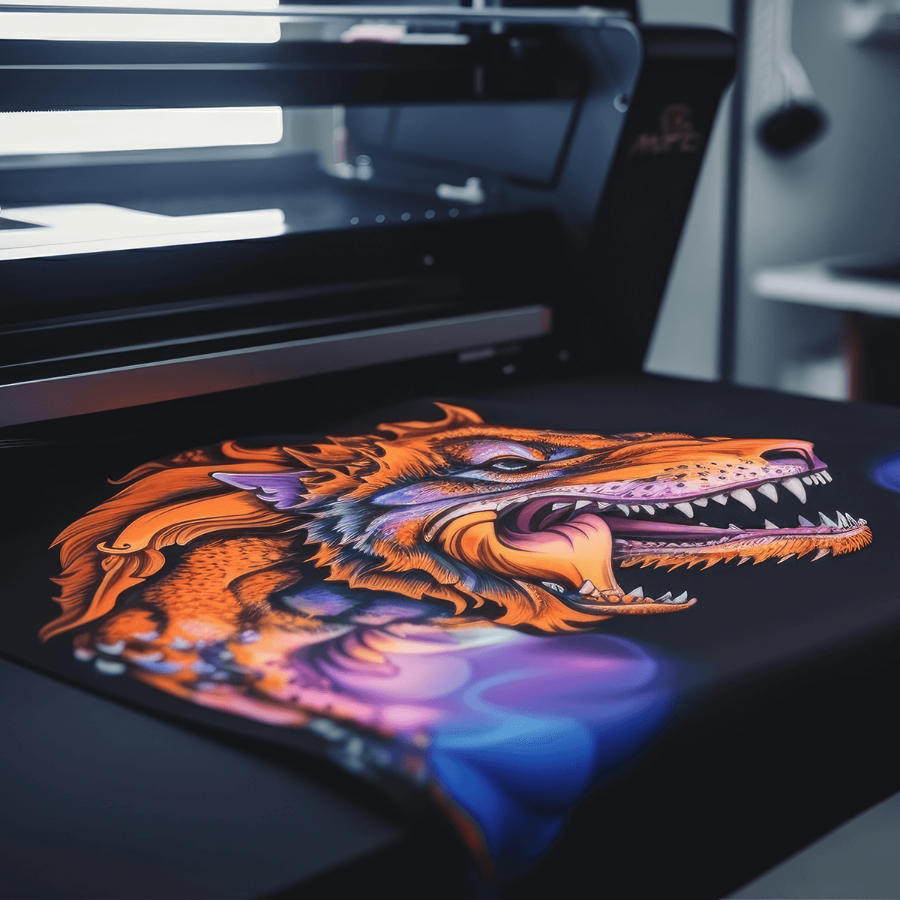
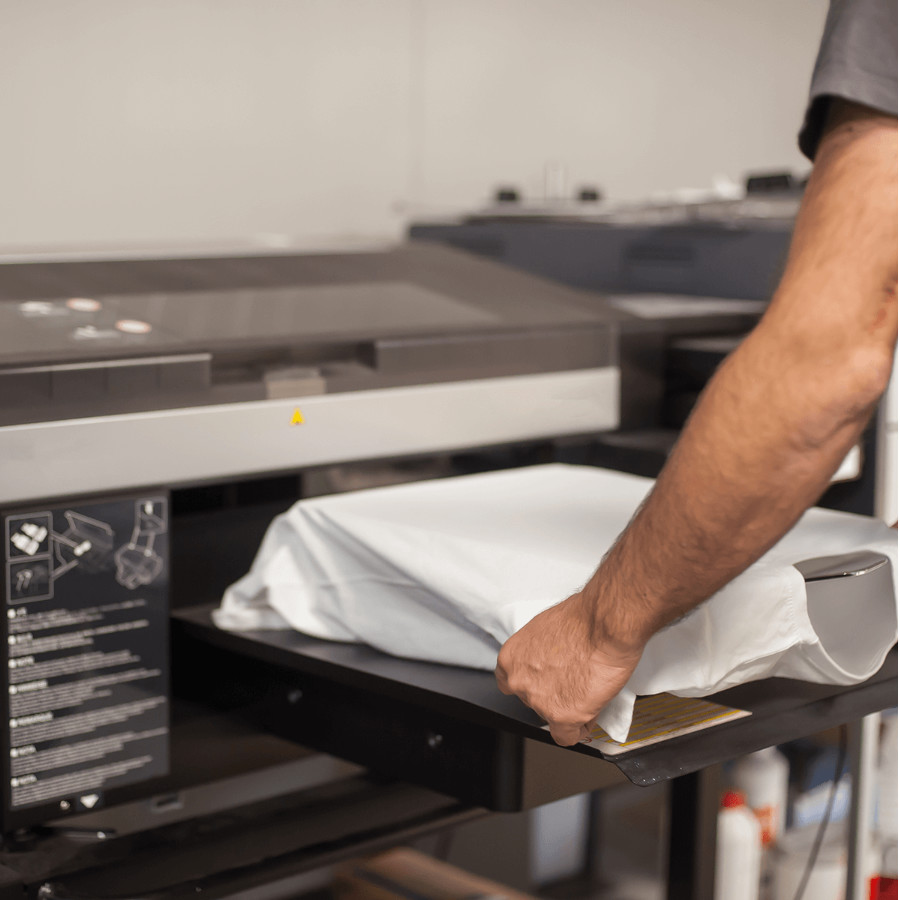
DTG printing works like a large inkjet printer, applying water-based ink directly onto the t-shirt fabric. The ink is absorbed by the cotton fibres, creating a smooth, flush finish that feels like part of the garment itself.
Best for:
- Complex, multi-coloured designs and photographs
- Cotton garments (requires at least 50% cotton content)
- One-off custom orders
- Small production runs with no setup costs
- Designs where you want an undetectable print feel
Advantages:
- Unrivalled print quality and detail
- Smooth finish – often can’t feel the print on the garment
- Works on both light and dark-coloured garments
- Perfect for print-on-demand models
- Excellent washability and durability
- No setup costs, ideal for short runs
Screen Printing
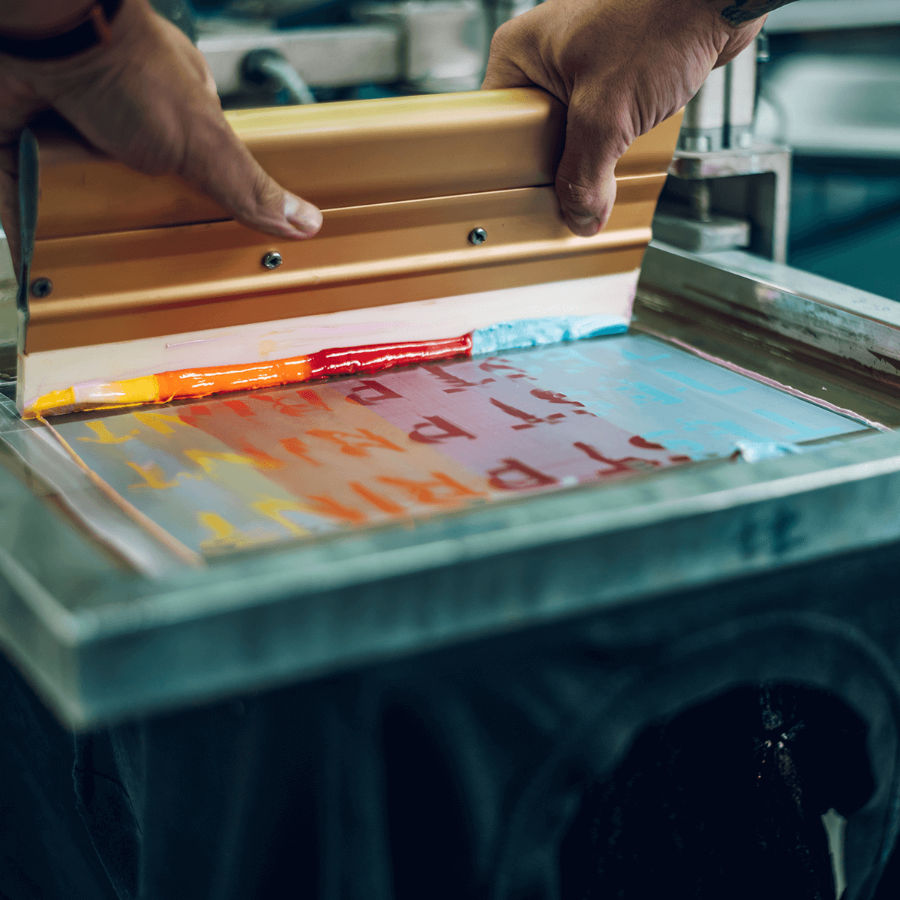
Screen printing involves creating a stencil (screen) for each colour in your design and layering ink onto the t-shirt. While it requires more setup, it becomes the most cost-effective option for larger orders.
Best for:
- Simple designs with limited colours (1-4 colours work best)
- Large batch orders (typically 50+ units)
- Bold, solid colour designs
- Achieving the lowest per-unit cost on bulk orders
- Promotional merchandise and corporate workwear
Advantages:
- Most cost-effective for bulk orders
- Extremely durable and long-lasting prints
- Vibrant, opaque colours
- Professional, high-quality finish
At My Personalised Clothing, we use industry-leading printing methods including DTF, DTG, and screen printing – all delivered from our UK facility. Our expert printing team will always choose the best method for your specific design and order size to ensure you receive the highest quality product at the most competitive price.
5. Set Up Legally in the UK
Once you’re ready to start selling, you need to ensure your t-shirt business is legally compliant. While it might seem daunting, setting up properly from the start protects you and builds credibility with customers.
Essential legal steps:
- Choose your business structure – Most home-based t-shirt businesses start as sole traders, which is the simplest option. You can transition to a limited company later as you grow
- Register with HMRC – You must register for Self Assessment and file annual tax returns. Register as soon as your earnings exceed £1,000 per year from your business
- Get business insurance – While not legally required for sole traders, public liability insurance protects you if a customer claims your product caused injury or damage
- Understand VAT requirements – You must register for VAT once your turnover exceeds £90,000 (as of 2025), though you can register voluntarily before this threshold
- Comply with consumer rights – Familiarise yourself with UK consumer rights legislation, particularly regarding refunds, returns, and product descriptions
- Check trademark availability – Before committing to a business name, search the UK Intellectual Property Office database to ensure it’s not already trademarked
Helpful resources:
- Gov.uk Business Support – Free advice for new businesses
- HMRC Self Assessment – Information about registering and filing returns
- UK Intellectual Property Office – Trademark searches and registrations
Setting up properly might require a few hours of admin work, but it gives you peace of mind and prevents costly issues down the line.
6. Price Your T-Shirts for Profit
Pricing is one of the most challenging aspects of starting a t-shirt business from home. Price too high, and you’ll struggle to compete; price too low, and you won’t make sustainable profits. Finding the sweet spot requires understanding your costs and your market.
Calculate your base costs:
- Production cost (printing and blank t-shirt)
- Platform fees (if selling through Etsy, eBay, or your own website)
- Payment processing fees (typically 2-3% plus a fixed fee)
- Shipping costs (even if you pass this to customers, factor it into your competitiveness)
- Marketing costs (divide your monthly ad spend by expected sales)
- Time investment (consider the hours you spend managing the business)
Common pricing strategies:
- Cost-plus pricing – Add a fixed markup to your costs (e.g., if a t-shirt costs £8 to produce and ship, sell it for £16-£20)
- Competitive pricing – Research similar businesses in your niche and price comparably
- Value-based pricing – Price based on the perceived value to your customer rather than just costs
- Psychological pricing – Use prices like £19.99 instead of £20 to make products feel more affordable
Most successful home-based t-shirt businesses aim for a markup of 100-150% on their production costs. For example, if a printed t-shirt costs you £10 to produce (including the blank garment and printing), you might sell it for £20-£25.
Pricing tips:
- Start with higher prices – it’s easier to discount than to increase prices later
- Offer bundles or multi-buy discounts to increase average order value
- Consider seasonal pricing for occasion-based designs
- Factor in the time spent on customer service and order management
- Remember that customers often associate higher prices with better quality
With My Personalised Clothing’s competitive custom t-shirts starting from just £2.99, you can maintain healthy profit margins while offering great value to your customers.
7. Build Your Online Presence
In today’s digital landscape, your online presence is your shopfront. Most customers will discover your t-shirt business online, so creating a professional digital presence is essential for success.
Creating Your Website
While marketplace platforms like Etsy offer a quick start, having your own website gives you full control over your brand, customer data, and profit margins.
Website platform options:
- Shopify – Purpose-built for e-commerce with excellent tools for beginners
- WooCommerce (WordPress) – The best option with good flexibility, but requires more technical knowledge
- Squarespace – Good templates and simple setup, though less customisable
- Wix – User-friendly with drag-and-drop functionality
We would recommend going for WordPress or Shopify. Squarespace and Wix are very beginner-friendly, but can be quite limiting as your brand grows.
Essential website elements:
- Clear product photography showing designs on actual t-shirts
- Detailed product descriptions including sizing and materials
- Simple checkout process with multiple payment options
- Mobile-friendly design (most customers shop on their phones)
- About page telling your brand story
- Contact information and customer service details
- Clear shipping and returns policy
Social Media Strategy
Social media is often the most cost-effective marketing channel for new t-shirt businesses. Focus on platforms where your target audience spends time.
Platform recommendations:
- Instagram – Perfect for showcasing designs visually and building a brand aesthetic
- Facebook – Good for building communities and running targeted ads
- TikTok – Excellent for reaching younger audiences with behind-the-scenes content
- Pinterest – Works well for niche designs and driving traffic to your website
Content ideas:
- Photos of your designs on real people (not just mockups)
- Behind-the-scenes content showing your creative process
- Customer photos and testimonials
- Design inspiration and stories behind your creations
- Lifestyle content that resonates with your niche
Consistency matters more than perfection. Posting regularly and engaging with your audience builds trust and keeps your business top-of-mind. Remember, tackle the platforms which are most suited to your brand. It can be very time-consuming managing lots of social media channels, so focus your initial efforts where your audience are most likely to be.

8. Market Your T-Shirt Business
Creating great t-shirt designs is only half the battle – you need to get them in front of potential customers. Effective marketing doesn’t require a huge budget, but it does require strategy and consistency.
- SEO – Optimise your website and product pages to rank higher in search engines and attract organic traffic
- Social Media – Build a following by posting consistently, engaging with your audience, and sharing customer content
- Email Marketing – Collect subscriber addresses and send regular updates about new designs and special offers
- Social Media Ads – Run targeted advertising campaigns on platforms like Facebook and Instagram to reach your ideal customers
- Search Engine Ads – Use paid search advertising, most likely Google Ads, to appear when potential customers search for t-shirts in your niche
- Influencer Partnerships – Collaborate with influencers in your niche to expand your reach and build credibility
The most successful t-shirt businesses use multiple marketing channels simultaneously, testing and refining their approach to find what resonates best with their target audience.
9. Choose the Right Printing Partner
Your printing partner directly impacts product quality, customer satisfaction, and your business reputation. Choosing wisely from the start saves headaches and protects your brand.
What to look for in a printing partner:
- Quality consistency – Look for companies with proven track records and positive reviews
- No minimum orders – Essential for testing designs without financial risk
- UK-based production – Faster delivery times and easier quality control
- Range of printing methods – Flexibility to choose the best technique for each design
- Transparent pricing – Clear costs with no hidden fees
- Responsive customer service – Quick responses when you have questions or issues
- Easy-to-use design tools – Streamlined process from design upload to order
My Personalised Clothing ticks all these boxes. Accredited with the Feefo Platinum Trusted Service Award in 2025, we produce high-quality personalised t-shirts using industry-leading DTF, DTG, screen methods and much more. We offer no minimum order requirements and free UK delivery on all orders, making us the ideal partner for businesses just starting out or scaling up. We offer white labelling services as well, so your customers receive products that look like they’ve come directly from your brand, not ours.
Whether you’re testing your first design or fulfilling bulk orders, our team is here to support your t-shirt business every step of the way. Get in touch to discuss how we can help bring your designs to life.
Final Thoughts
Starting a t-shirt business from home is an exciting opportunity that’s more accessible than ever before. With the right niche, quality designs, and a reliable printing partner, you can build a profitable business without massive upfront investment or complex logistics.
Remember, every successful t-shirt business started exactly where you are now. Focus on creating designs your niche audience genuinely wants, provide excellent customer service, and be patient as you build momentum. It takes time to gain traction, but with consistency and quality, your home-based t-shirt business can grow into a sustainable income stream.
Ready to get started? Browse our range of t-shirts and start designing today. Whether you’re just starting out with your first design or fulfilling hundreds of orders per month, our team is here to help. Contact us today.
